A Dedicated Craft Room: Designing a Beautiful Home for Sewing, Making and Mending
Imagine a light-filled craft room where generous worktables, thoughtful storage and a comfortable mending chair make creativity part of everyday life.
AI-generated concept imagery. These illustrations are not documentary photographs or proof that a place exists.
MyFantasticHome.com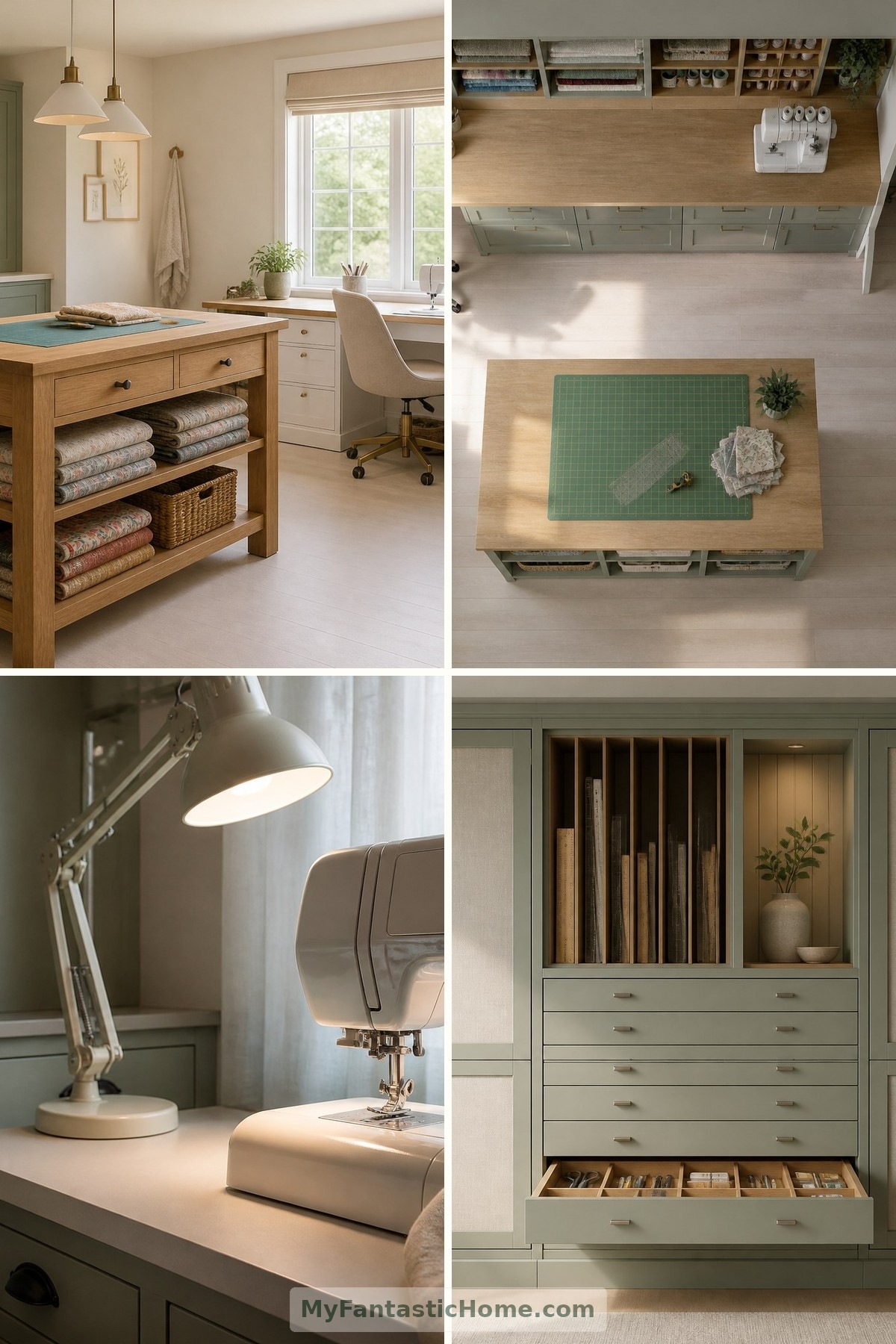
A dream home makes room for what we love doing, not simply for what we own. For anyone who sews, quilts or repairs treasured clothes, a dedicated craft room offers a particular kind of luxury: somewhere to leave a project ready for tomorrow. This imagined residential design brings practical workshop thinking into a warm, welcoming interior.
1. Give Every Task Its Place
Begin with the movement between measuring, cutting, stitching and pressing. Arrange these activities in neighboring zones, with a clear route between them. Position the sewing machine on a stable desk, keep the cutting surface separate, and give the ironing board a permanent parking place. A generous doorway helps when carrying fabric rolls or moving furniture.

2. Invite Daylight, Then Refine It
A broad window makes the room feel generous, but direct sun can create glare and fade exposed textiles. Adjustable blinds or sheer curtains offer control. Supplement daylight with even overhead illumination and an adjustable task lamp aimed at the needle plate. Matte worktops reduce distracting reflections, while carefully positioned lighting helps keep your hands from shadowing delicate stitches.

3. Make Storage Beautifully Specific
Instead of one deep cupboard, combine shallow drawers for tools, upright compartments for rulers and closed shelving for fabric. Store frequently used thread within easy reach, away from prolonged sunlight. A small display shelf can hold a favorite handmade object, while scissors, rotary cutters and needles belong in secure storage when children share the home.

4. Build Around a Generous Cutting Table
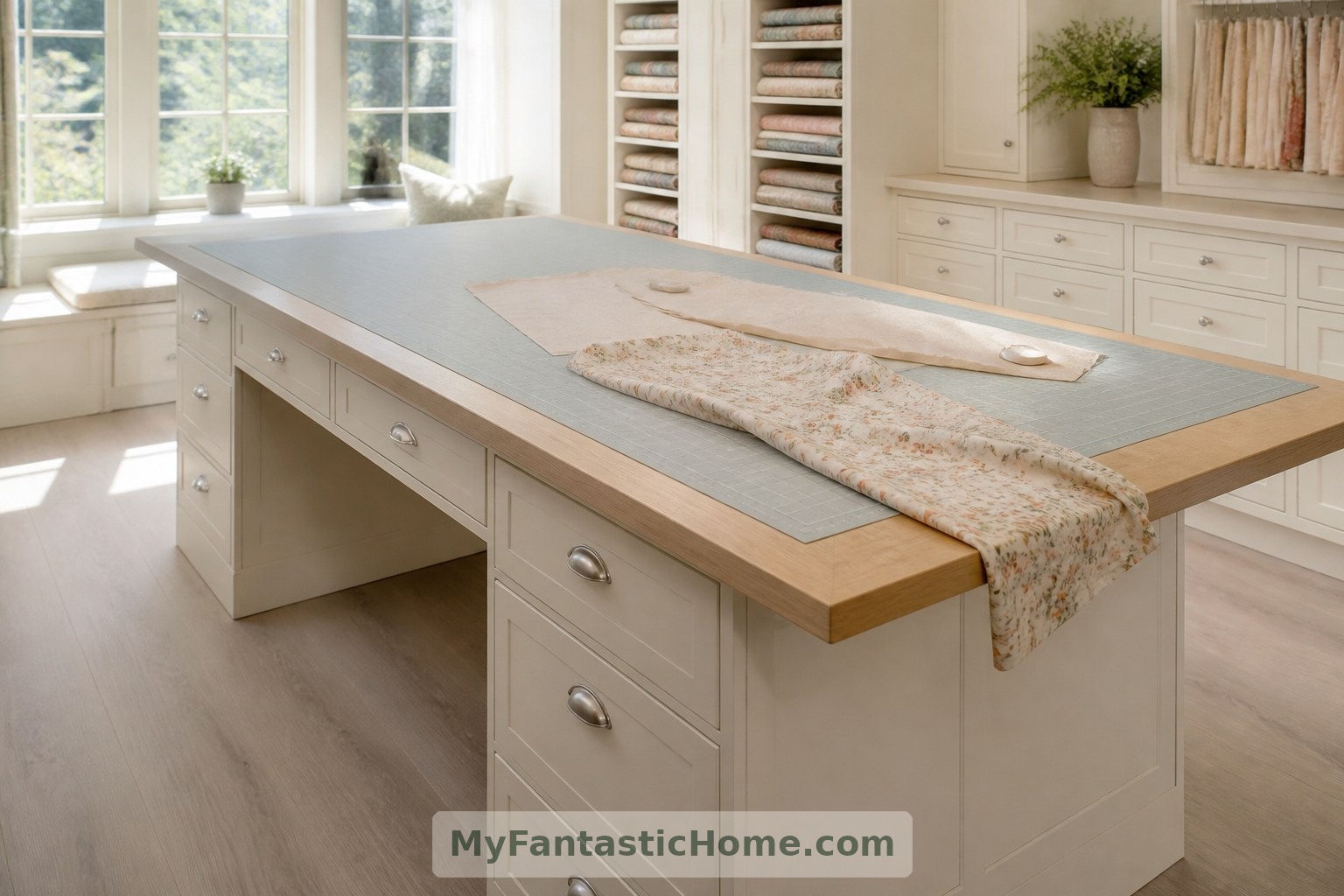
The central table is the room’s working heart. Choose its height around the person using it, testing the position before committing to built-in cabinetry. A replaceable cutting mat protects the surface; drawers underneath keep pattern paper close. Leave enough space to move around the table without squeezing past chairs, and reserve one clear end for laying out longer pieces.
5. Save a Quiet Corner for Mending
Not every task needs a machine. Beside the window, a supportive upholstered chair, a small side table and a focused lamp create an inviting place for hand sewing. Add a basket for garments awaiting repair and a tray for the current project. This modest corner turns maintenance into a gentle household ritual rather than another unfinished chore.

6. Choose Finishes That Welcome Work
Painted cabinetry, oak accents and a pale, cleanable floor can feel domestic without becoming precious. Avoid thick rugs beneath rolling chairs, and choose surfaces from which stray pins are easy to spot. Plan accessible electrical outlets to keep cords out of walkways. Include ventilation suited to your activities, especially if making extends to adhesives or other products with specific safety instructions.


The most extraordinary craft room is not necessarily the largest. It is the one that supports your habits, protects your materials and makes beginning feel easy. With thoughtful light, useful storage and space to pause, this imagined room gives creativity a lasting place at home.
How does this inspire you?
Choose one reaction. Click it again to remove it. Your choice is saved with a browser cookie.
Loading reactions…