Hotels Inside Converted Harbor Cranes: Compact Suites with Towering Views
A former harbor crane can become an extraordinary place to sleep. Explore real Dutch crane hotels, then imagine the compact interiors, careful details and expansive views that make this unusual way of staying so compelling.
AI-generated concept imagery. These illustrations are not documentary photographs or proof that a place exists.
MyFantasticHome.com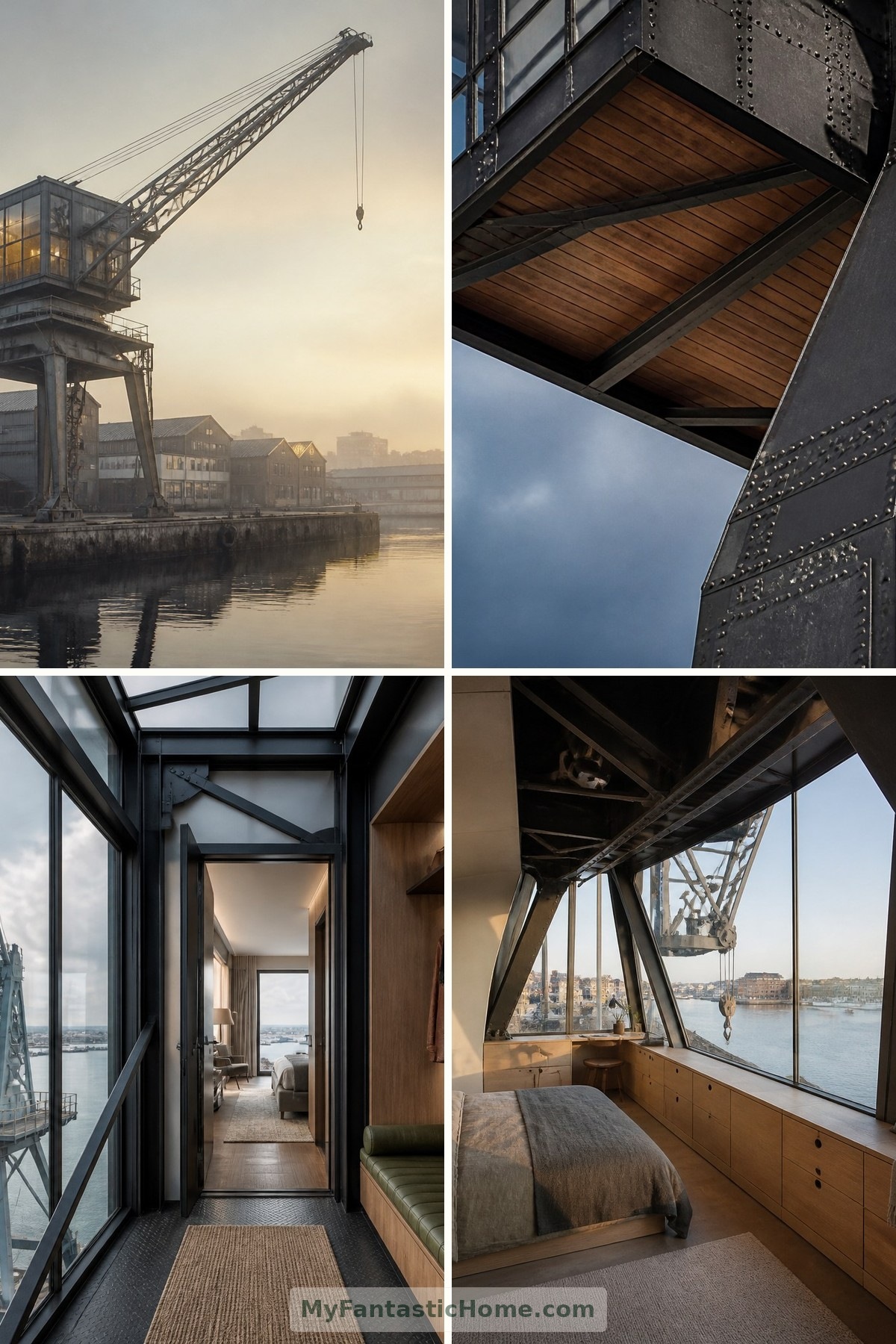
Some dream stays begin with a garden gate. Others begin beneath a steel structure once built to move cargo. Converted harbor cranes offer a wonderfully different proposition: a compact retreat lifted above the waterfront, where industrial engineering becomes part of the experience. Their appeal lies in the contrast between a small, sheltered interior and the immense working landscape beyond.
1. A Real Industrial Reinvention
This is not simply a fantasy. In the Netherlands, the harbor crane hotel in Harlingen and Faralda, housed in a former shipyard crane at Amsterdam’s NDSM wharf, demonstrate that cranes can accommodate overnight guests. They are distinct properties, not examples of a standard hotel type; their layouts, access arrangements and surroundings should be checked individually.
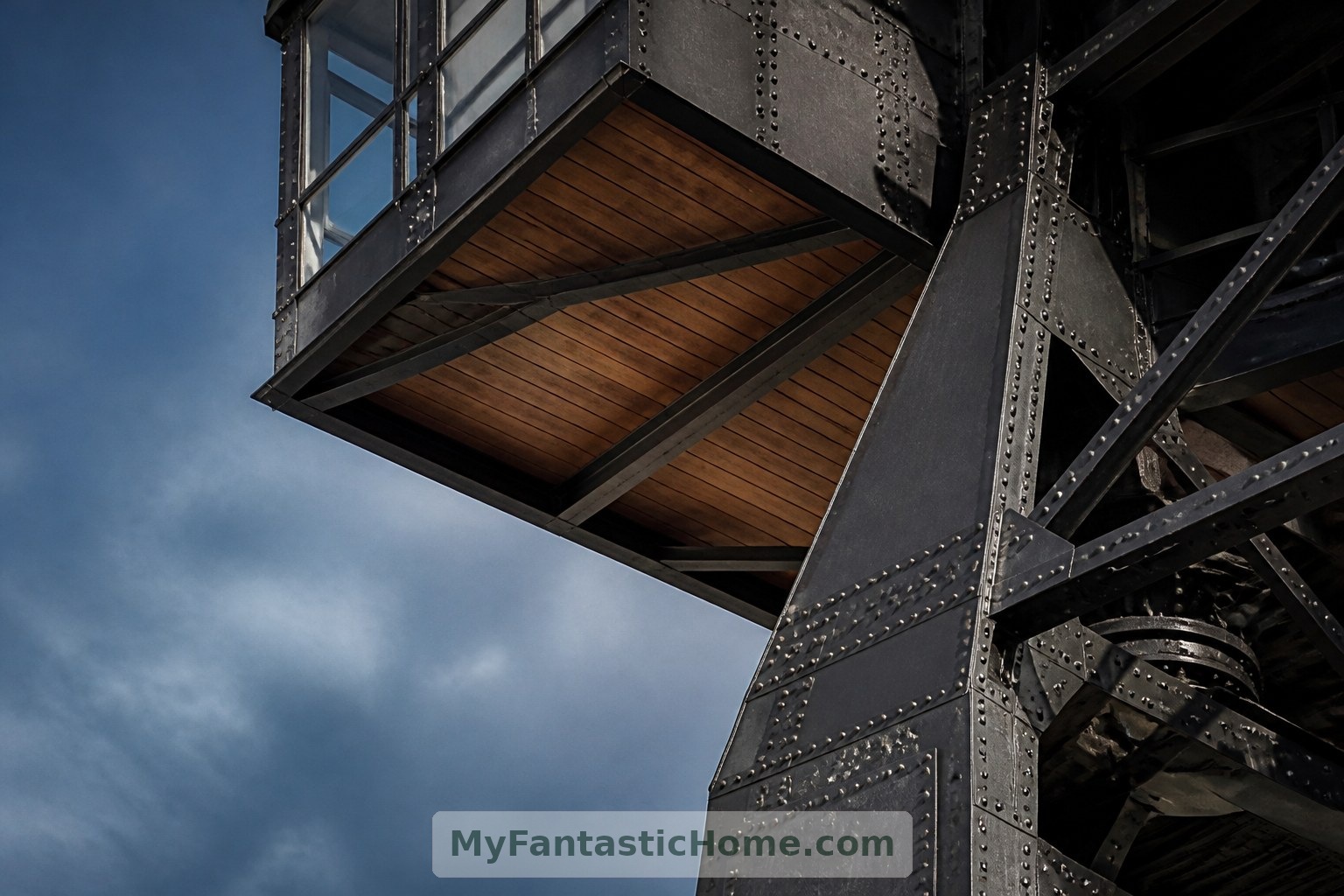
The interiors described below are imagined design ideas, not claims about either hotel’s rooms or facilities.
2. Let the Structure Tell Its Story
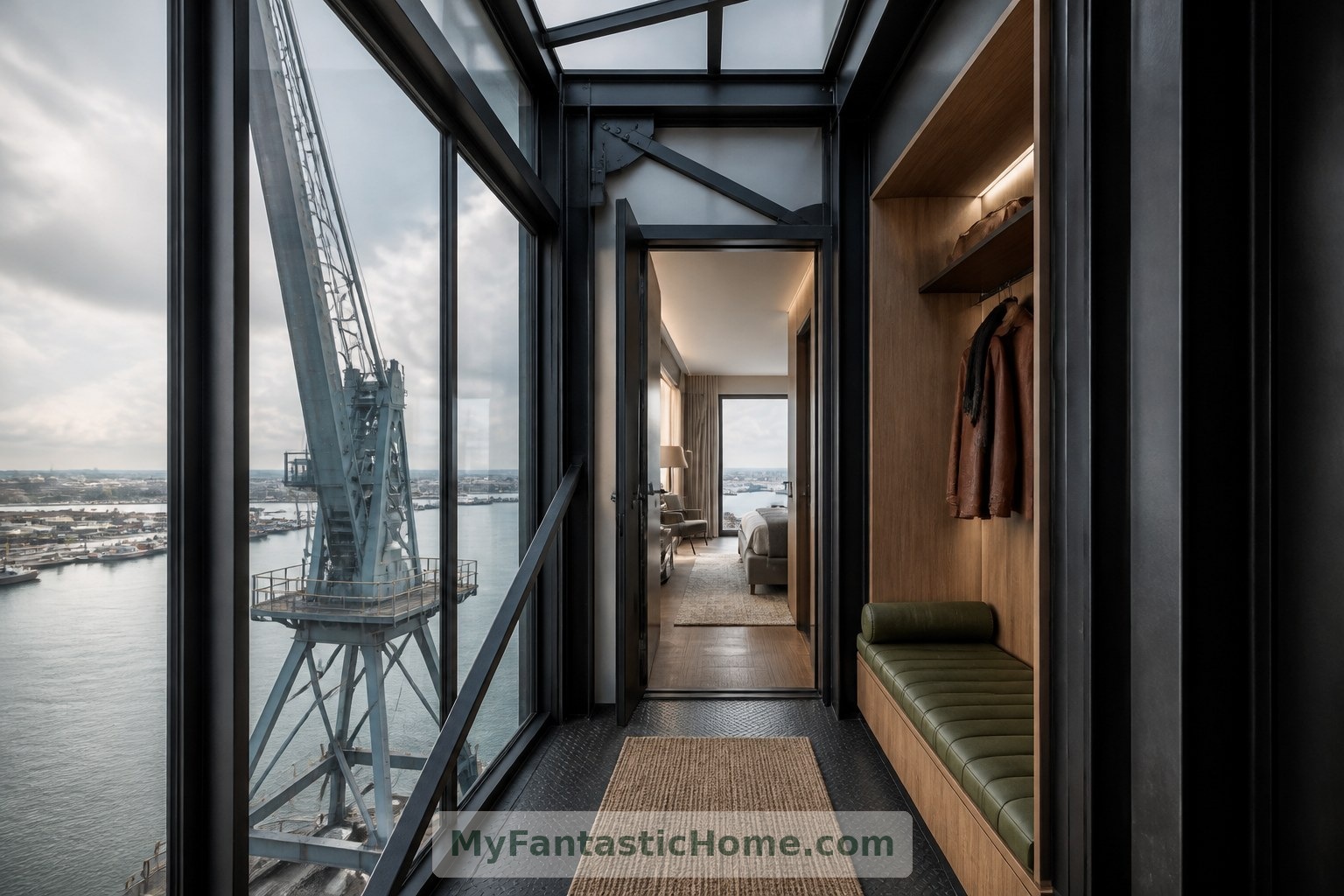
For an imagined conversion, the most compelling starting point is the crane itself. Riveted plates, diagonal braces and deep steel beams provide character that decorative industrial styling cannot quite reproduce.
Rather than concealing every irregularity, a designer might leave selected structural elements visible beside smooth wall linings. A restrained palette of warm timber, muted fabric and dark metal would soften the enclosure without disguising its origins. Any retained coatings or exposed materials would need appropriate assessment and treatment.
3. Make Arrival Part of the Architecture
A room in the sky needs more than a dramatic silhouette. Access, emergency escape, structural capacity and exposure to weather are fundamental design questions, not finishing touches.
In a conceptual scheme, an enclosed arrival landing could create a gentle transition from exposed harbor to quiet suite. A narrow bench and recessed coat storage would offer somewhere to pause. Actual access conditions vary, so travelers should confirm mobility requirements directly with a property rather than assume a conventional hotel entrance.
4. Give the Small Suite Breathing Room
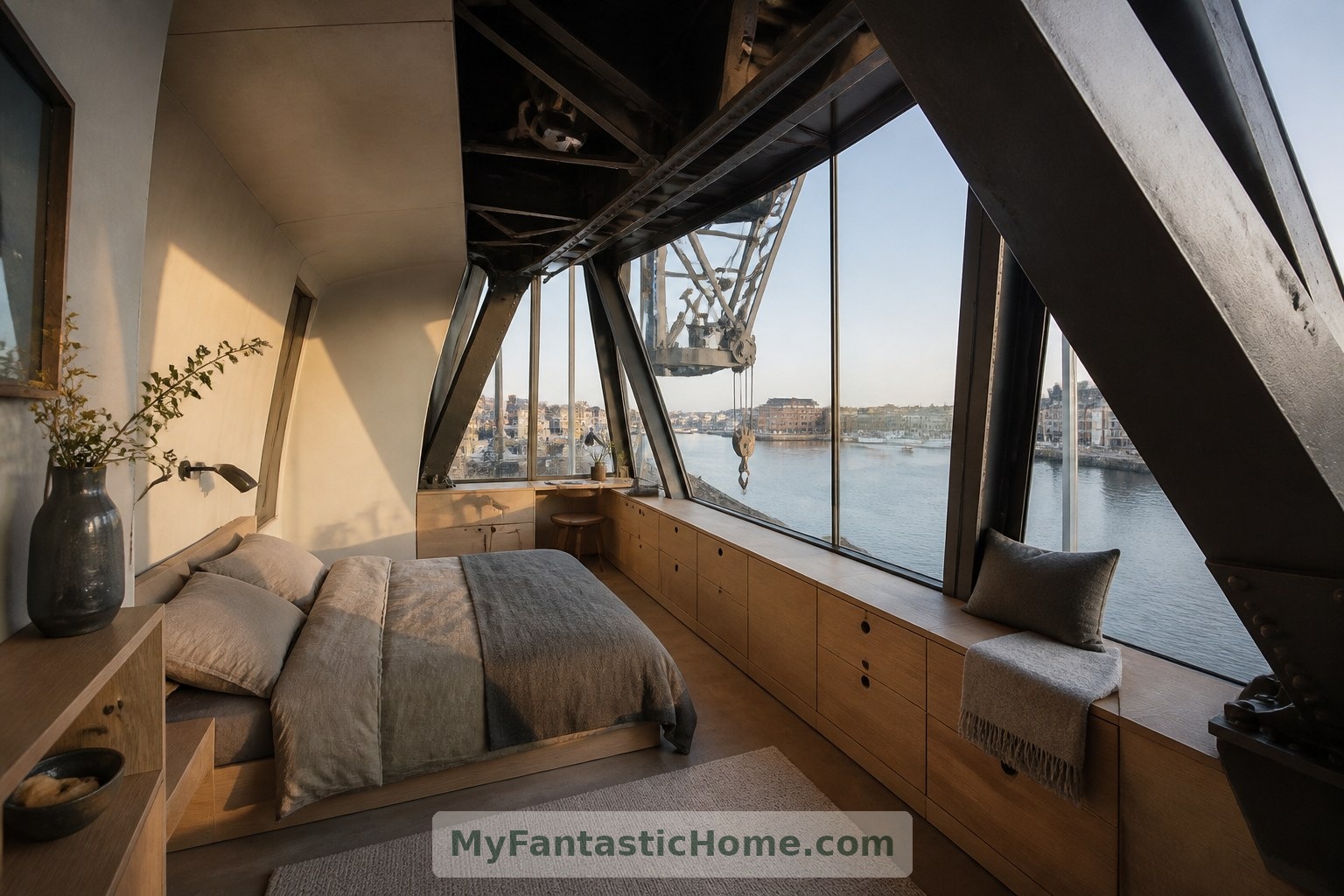
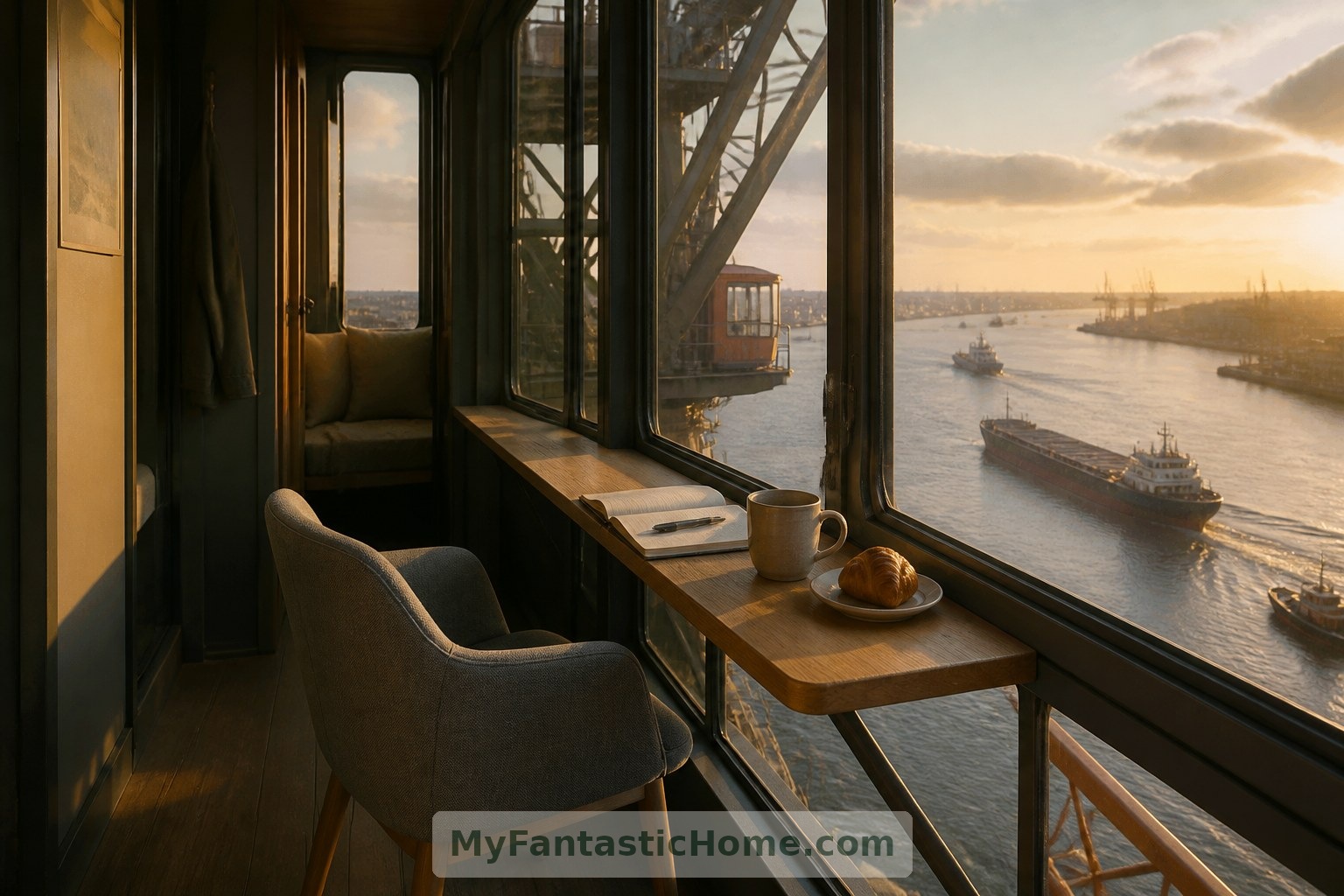
Imagine one principal room organized around the view. A low bed keeps sightlines open, while built-in drawers reduce the need for freestanding furniture. A slim window-side ledge could serve as a breakfast table or writing surface.
The goal is not to squeeze an entire apartment into a crane cabin. It is to choose a few generous experiences: comfortable sleep, a good seat and space to watch the water.
5. Tuck Practical Spaces Behind the Scenes
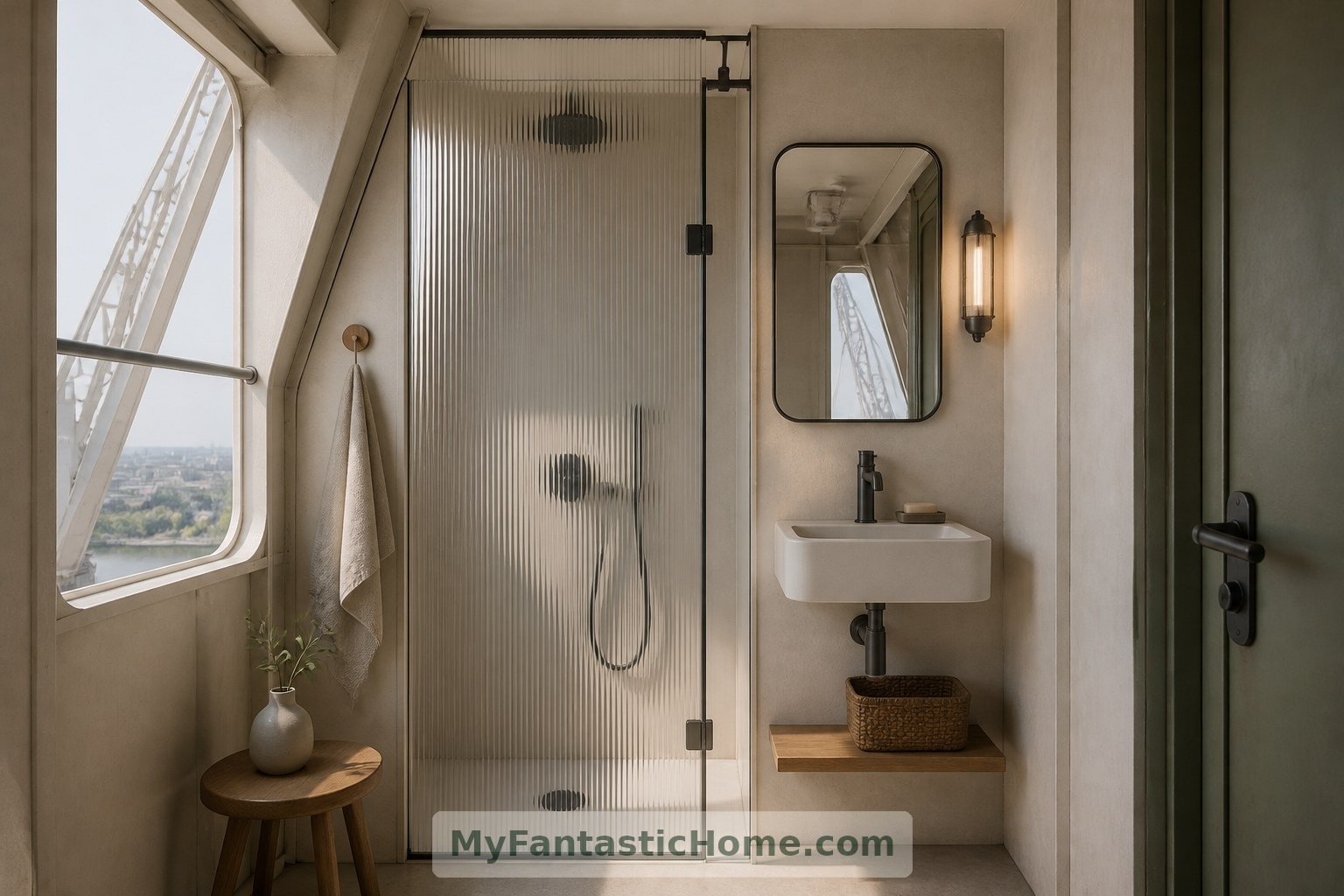
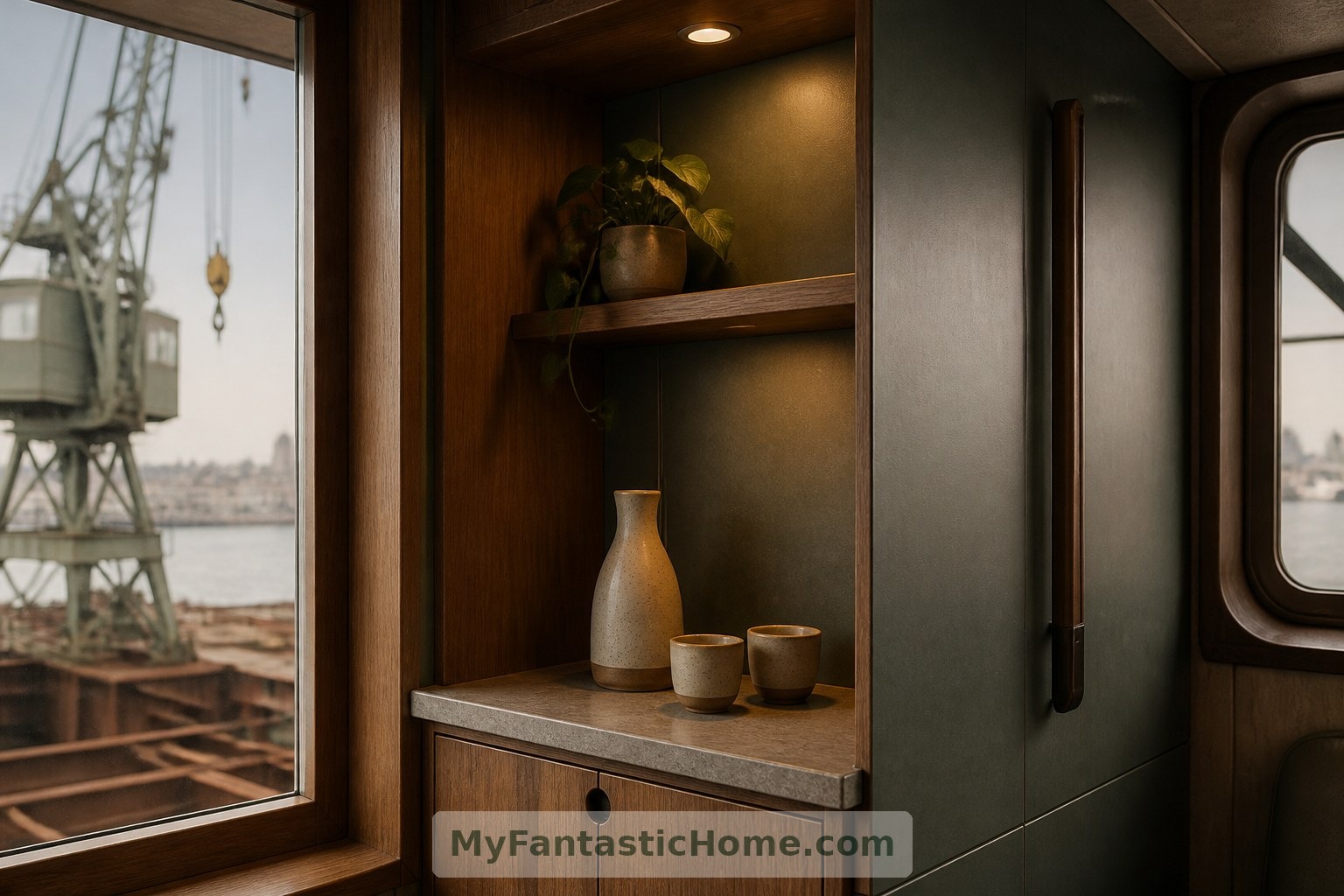
In this imagined interior, a compact bathroom and modest refreshment niche occupy the more enclosed side of the plan. Ribbed glass could borrow light while maintaining privacy; pale, matte surfaces would keep the small bathroom visually calm.
These are design possibilities, not advertised amenities. Plumbing, ventilation and maintenance access would all need to shape the eventual layout.
6. Let the Harbor Set the Mood
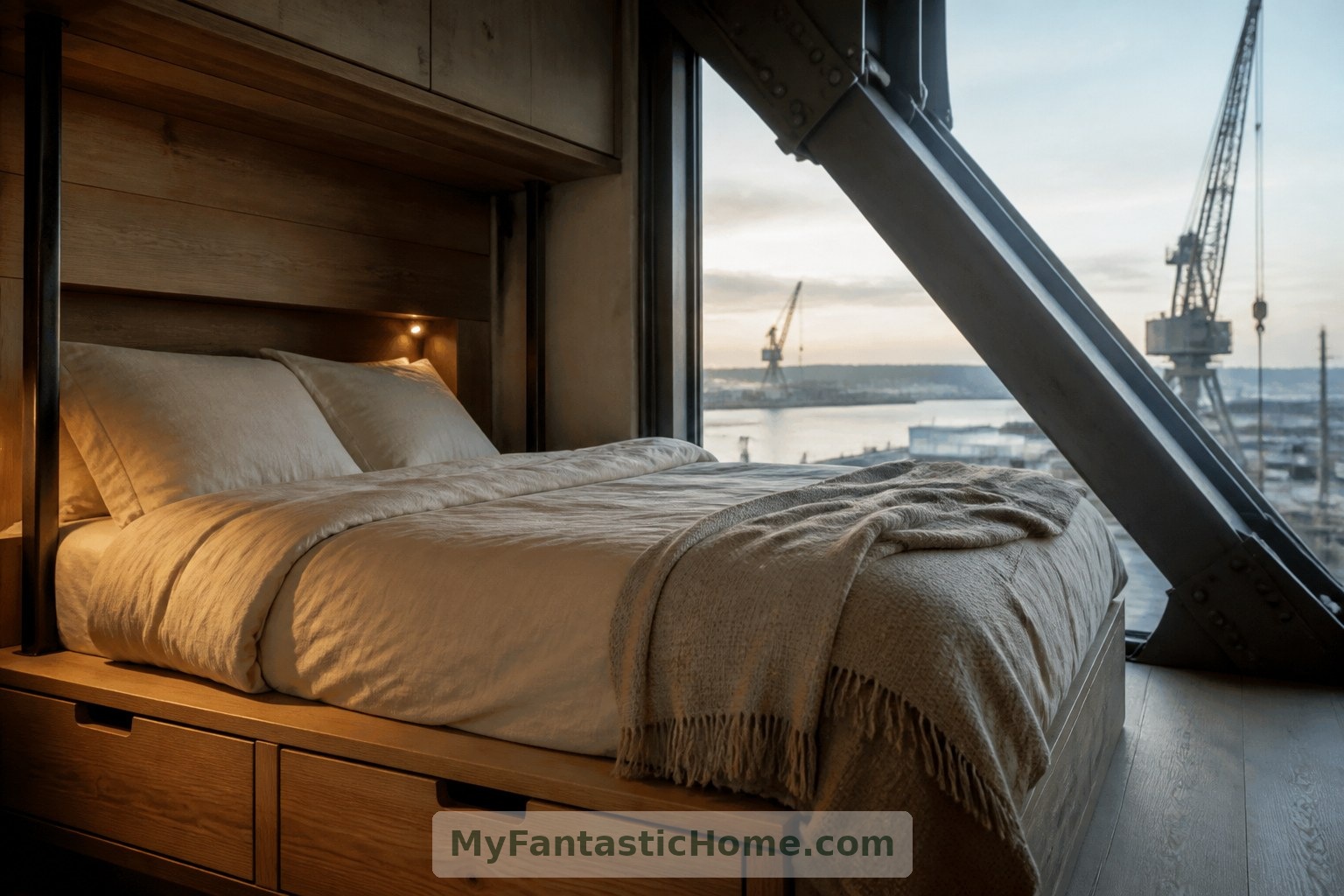
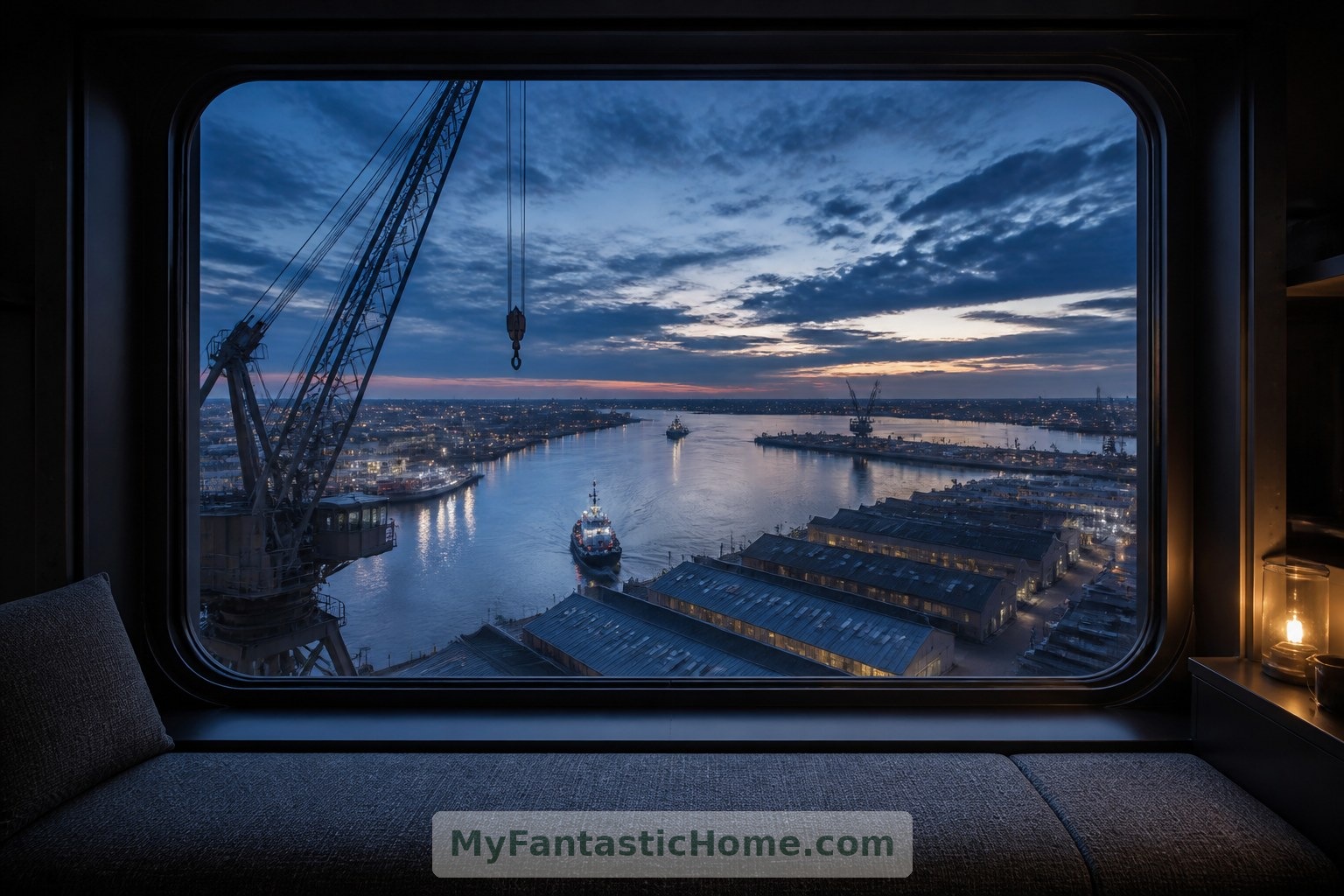
The finest furnishing may be the changing horizon: vessels moving slowly, clouds gathering over warehouses, water catching the last light.
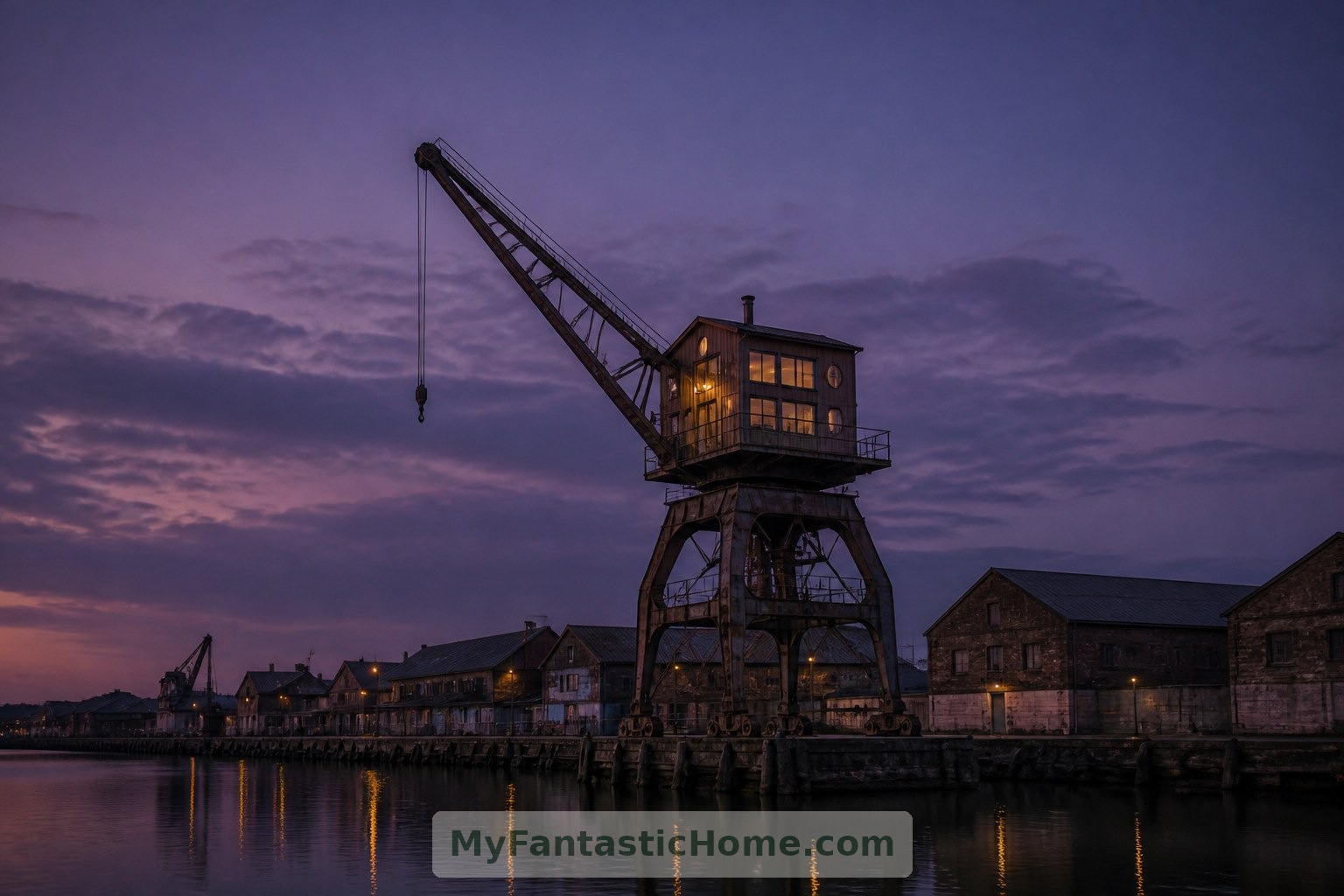
At dusk, low-level interior lighting could preserve that connection better than bright ceiling fixtures. A comfortable window seat would turn waiting and watching into the evening’s main event.
A crane hotel makes an extraordinary home for a night by changing the scale of everyday life. The room becomes smaller, the view becomes larger, and familiar comforts gain fresh meaning against a structure built for entirely different work.
How does this inspire you?
Choose one reaction. Click it again to remove it. Your choice is saved with a browser cookie.
Loading reactions…